

Where reverberation begins
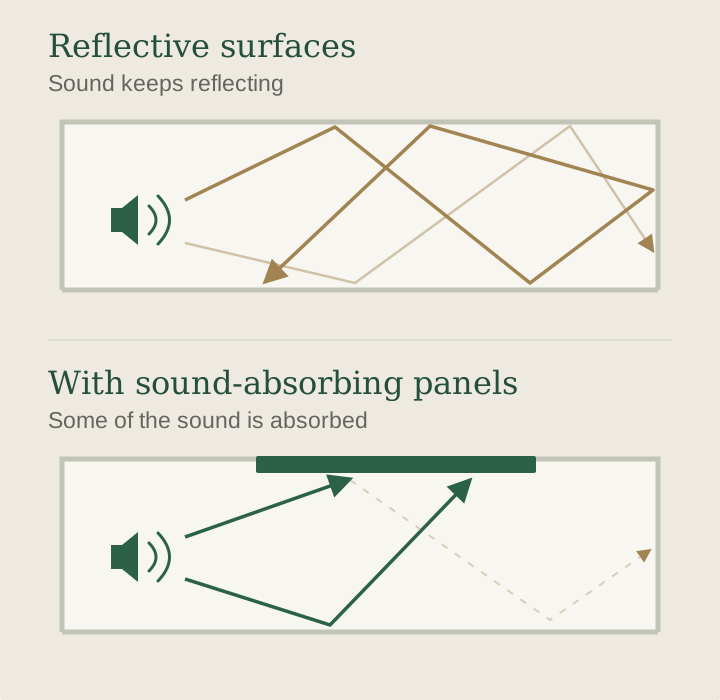
Glass, hard floors and bare walls reflect sound. These reflections continue after a voice has stopped and overlap with the words that follow: this is reverberation. When there is too much of it, following a conversation takes more effort, especially when several people are speaking in the same room.
More room for conversation
Sound absorption helps control how long sound lingers. By absorbing some of the sound energy that reaches it, the panel reduces reflections and helps make listening clearer. In a restaurant, a waiting room or a shared space, the benefit is more comfortable conversation and a more pleasant place to spend time.
The right presence in the room
The acoustic effect depends on the room and the amount of absorbing surface installed. Volume, height, furnishings and glazed surfaces matter alongside the number and position of the panels. On a wall or ceiling, a composition therefore needs to consider the whole space: the same arrangement can produce different results in different rooms.
Absorption and insulation
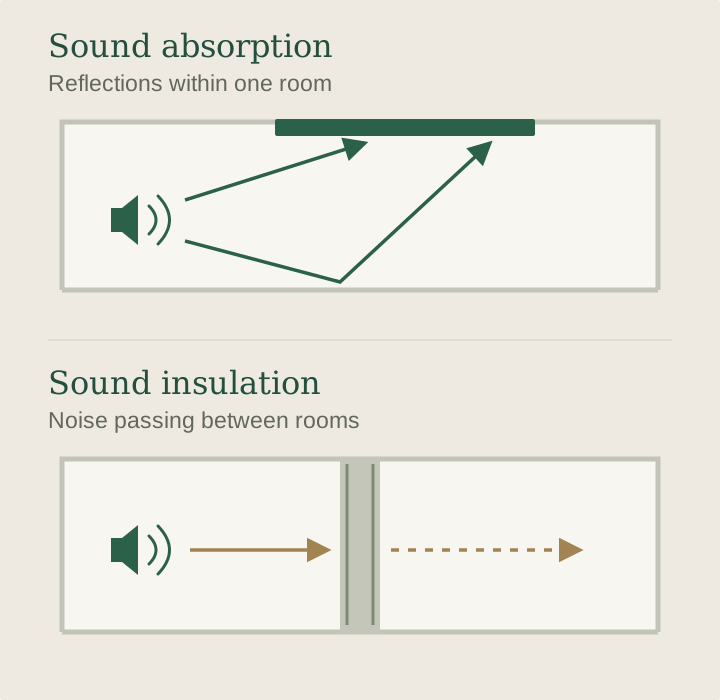
Sound absorption improves the way sound behaves inside a room by reducing reverberation. Sound insulation concerns noise passing between spaces and involves walls, floors, doors and other building elements. The panel contributes to comfort within the room; it does not replace work designed to limit noise coming from outside or from a neighbouring room.